Types of Fluid Leaks in a Car: Where They Happen and How to Find Them Fast
A leak under a vehicle isn’t just a mess — it’s a signal. Whether it’s engine oil, coolant, or A/C refrigerant, a small seep today can turn into a significant component failure tomorrow.
At Tracer Products, we see it every day: the fastest repairs start with the correct leak location, confirmed with a proven detection method. This guide breaks down the most common types of automotive leaks with engine oil, coolant, and refrigerant, where they typically originate, and some key signs based on the leak itself.
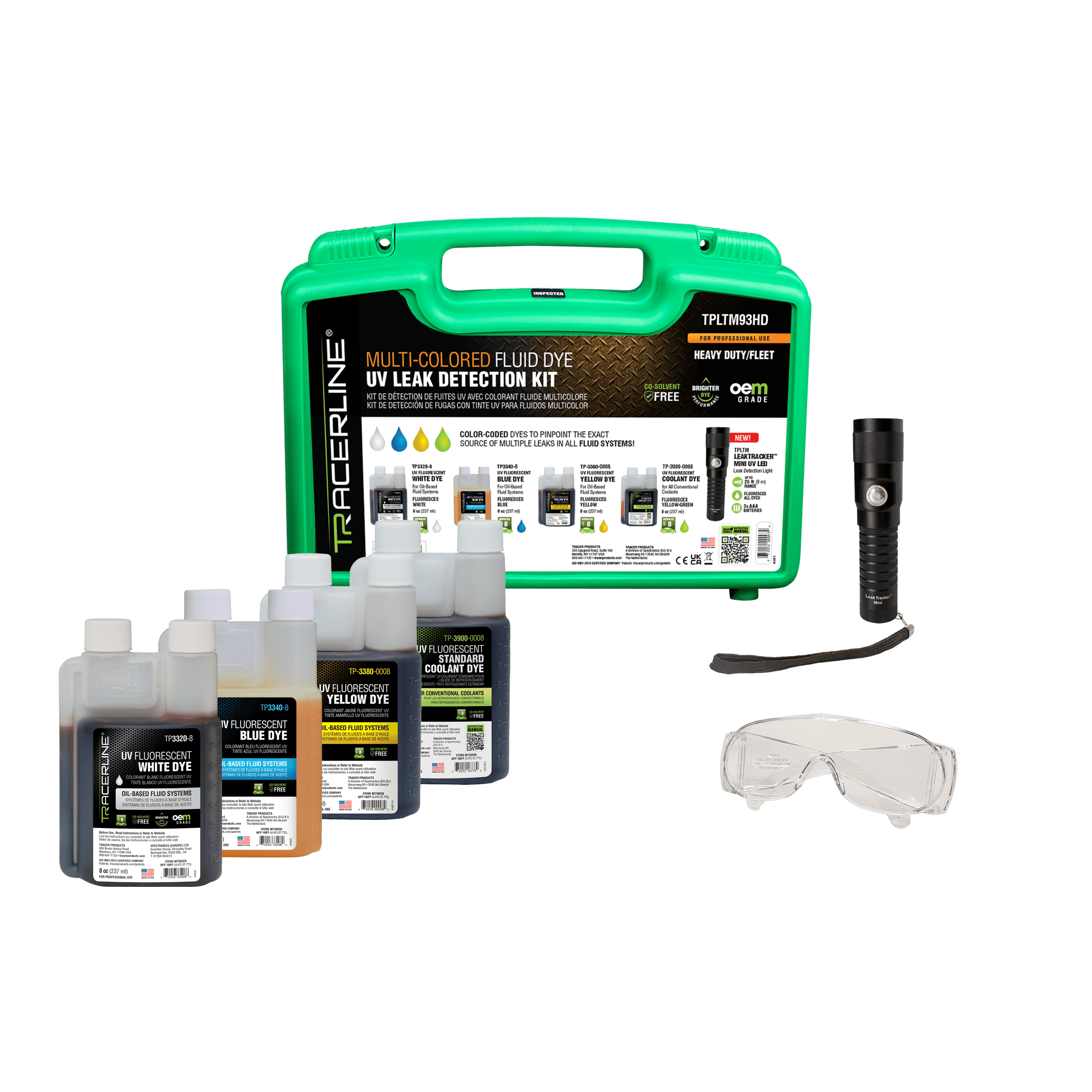
If you’re already troubleshooting a leak, start here: Tracerproducts offers OEM and Aftermarket leak detection solutions that are built to help you find the source quickly, not guess at the symptom.
Why Fluid Leaks Deserve Immediate Attention
Vehicles rely on fluids to lubricate, cool, and protect critical systems. When those fluids escape, you’re risking:
- Overheating and accelerated engine wear
- A/C performance loss that worsens over time
- Component corrosion and system contamination
- Higher repair costs from delayed diagnosis
The good news: most leaks follow predictable patterns. Once you know the common leak points, you can narrow the problem quickly — and confirm it with the right tools.
Engine Oil Leaks: Protecting the Heart of the Engine
Engine oil keeps all the moving parts inside the engine lubricated and cool. When oil leaks, parts can overheat, wear prematurely, and eventually fail.
Here are the most common engine leak locations in a vehicle:
| Engine Components that can leak oil | Location and why the equipment can leak | Signs of Leaks based on the component |
|---|---|---|
| Valve Cover Gaskets | Location: On top of the engine, sealing the valve covers to the cylinder head. Why do they leak: Heat cycles cause the rubber or composite gasket to dry out, shrink, and crack. When this happens, oil starts seeping down the sides of the engine. | – Oily residue around the perimeter of the valve cover – Oil running down the engine, sometimes burning off on hot exhaust parts – Burning oil smell under the hood |
| Oil Pan Gasket and Drain Plug | Location: At the bottom of the engine, the oil pan holds the engine’s oil supply. Why do they leak: – Oil Pan Gasket: Age, overtightening, or impact damage can cause the gasket to fail. – Drain plug: A worn washer, damaged threads, or a loose plug can allow oil to drip slowly. | – Oil spots under the front or middle of the vehicle – Wet, oily buildup around the oil pan lip or drain plug |
| Front and Rear Main Seals | Location: At the front and rear of the crankshaft where it passes through the engine block. Why do they leak: Constant rotation, heat, and age cause these seals to harden and wear, especially on higher-mileage engines. | – Oil is leaking between the engine and transmission – Oil is collecting around the lower front of the engine where the crankshaft pulley is located |
| Oil Filter and Housing | Location: Mounted to the engine, sometimes on a separate housing or adapter. Why do they leak: – Filter not tightened correctly – Damaged or double-stacked filter gasket – Cracks or gasket failures in the filter housing | – Fresh oil around the filter after an oil change – Leaks that show up shortly after service |
| Oil Pressure Sensor | Location: Threaded into the engine block or cylinder head. Why do they leak: The sensor body can crack, or the sealant can fail, allowing oil to seep out around the connector or threads. | – Wet, oily area around the sensor – Oil drips running down from the sensor location – Intermittent or incorrect oil pressure readings |
| Head Gasket (Oil Side) | Location: Between the engine block and cylinder head. Why do they leak: A failing head gasket can allow oil to leak externally or mix with coolant internally, depending on the failure area. | – Milky, frothy oil (oil and coolant mixing) – Oil seepage where the head meets the block – Overheating combined with fluid loss |
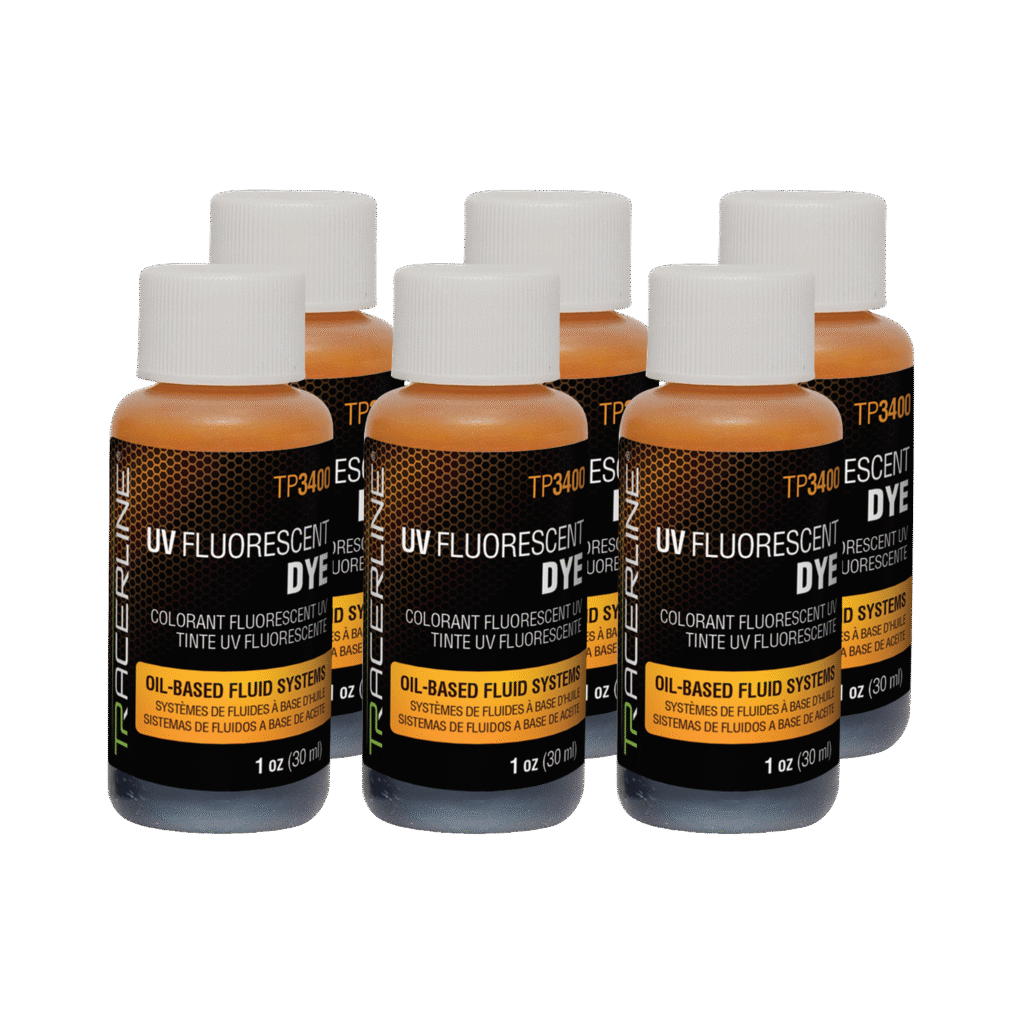
Tracerline OEM-Grade TP3400 series UV dye for oil-based fluid systems is perfect for pinpointing leaking engine oil, fuel, transmission fluid, power steering fluid, and more. Pinpoint leaks in deteriorating gaskets and other critical components. TP3400 is fully compatible with oil-based fluids and can safely remain in the system. The UV dye fluoresces a yellow/green color and works with all leak detection flashlights. Please see the instructions for applications and dye dilution ratios.
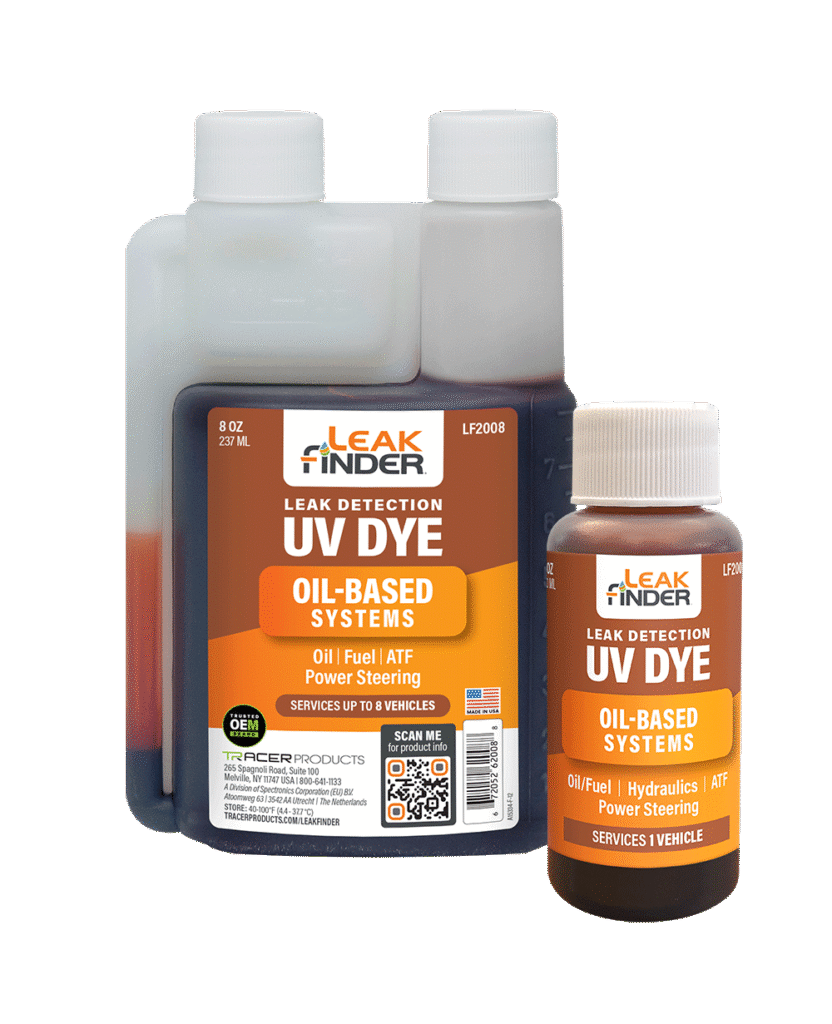
Leakfinder Aftermarket LF2000 Oil-based dye offers dyes for oil-based fluids, addressing systems containing oil, fuel, transmission fluid, power steering fluid, and more. The dye fluoresces a yellow/green color and is compatible with all leak detection flashlights (blue light, violet light, and ultraviolet light).
A/C Refrigerant Leaks: Why Your Air Conditioning Loses Its Cool
Unlike oil or coolant, A/C refrigerant turns into a gas when it escapes so that you won’t see obvious puddles under the car. Instead, refrigerant leaks usually leave behind a light oily residue at the leak point, and you’ll notice a drop in A/C performance.
Here are the most common refrigerant leak locations in a vehicle:
| A/C Components that can leak | Location and why the equipment can leak | Recommendation for the leak site |
|---|---|---|
| Schrader Valves (Service Ports) | Location: On the high- and low-pressure A/C service ports. Why they leak: – Aging internal valve seals – Dirt or debris stuck in the valve – Damage from frequent use or improper service tools | These are among the most common A/C leak sources and can account for a large percentage of refrigerant leaks in everyday repair shops. |
| O-Ring Fittings and Seals | Location: At connections where A/C lines attach to components (compressor, condenser, evaporator, etc.) Why they leak: – Rubber O-rings dry out, shrink, or crack over time – improper installation, over-tightening, or misalignment | Even a minimal loss of refrigerant can significantly affect A/C performance. |
| A/C Compressor Shaft Seal | Location: Front of the compressor where the drive shaft exits the housing. Why they leak: – Constant rotation and pressure changes – Lack of use causing seals to dry out – Contamination or incorrect lubrication inside the system | A failing shaft seal can leave oily residue on or around the front of the compressor. |
| Hoses and Crimp Connections | Location: Flexible rubber lines and their crimped metal fittings. Why they leak: – Cracking from age, heat, and vibration – Flexing near bends and mounting points – Corrosion at the crimped metal sections | Inspect for oily residue along the hose or at the crimps. |
| Condenser | Location: At the very front of the vehicle, typically in front of the engine radiator. Why it leaks: – Rock and road-debris impact – Corrosion of thin tubes and fins – Damage from the minor front-end collisions | Because of its exposed location, the condenser is a frequent leak culprit. |
| Evaporator Coil | Location: Inside the dashboard, part of the HVAC box Why it leaks: – Corrosion of thin copper or aluminum tubing – Contaminants and moisture creating acids on the coil | Evaporator leaks are hard to see directly and often require advanced leak detection tools or dash disassembly. |
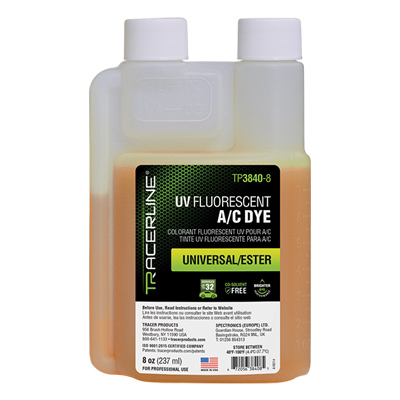
Tracerline: Fluoro-lite 5 SERIES A universal A/C dye that works across various oils and refrigerants, reducing inventory and service complexity. Technicians can quickly detect leaks in mixed fleet vehicles or retrofit systems without guessing compatibility. Early leak detection cuts refrigerant loss, minimizes costly rework, and helps meet environmental standards.
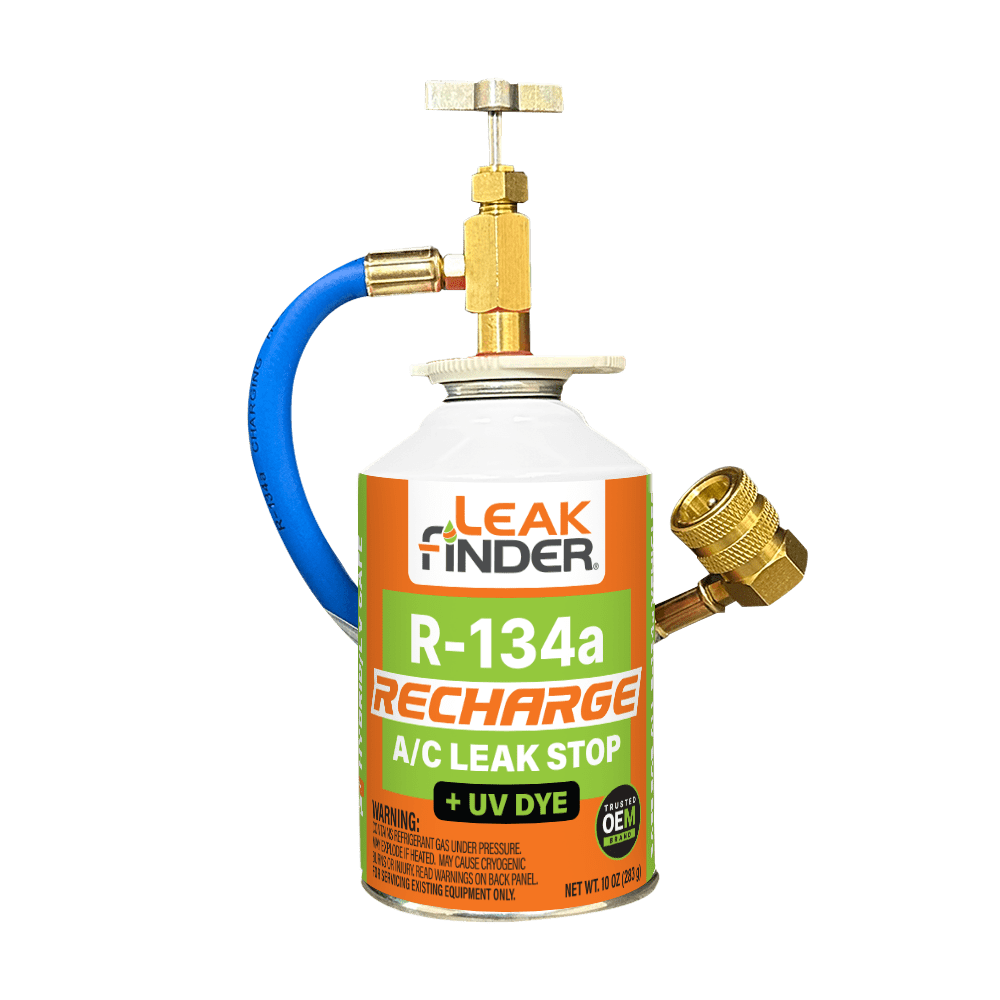
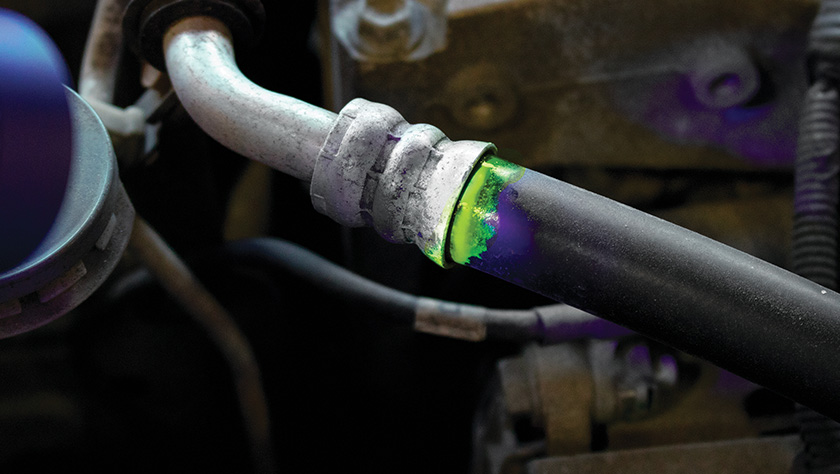
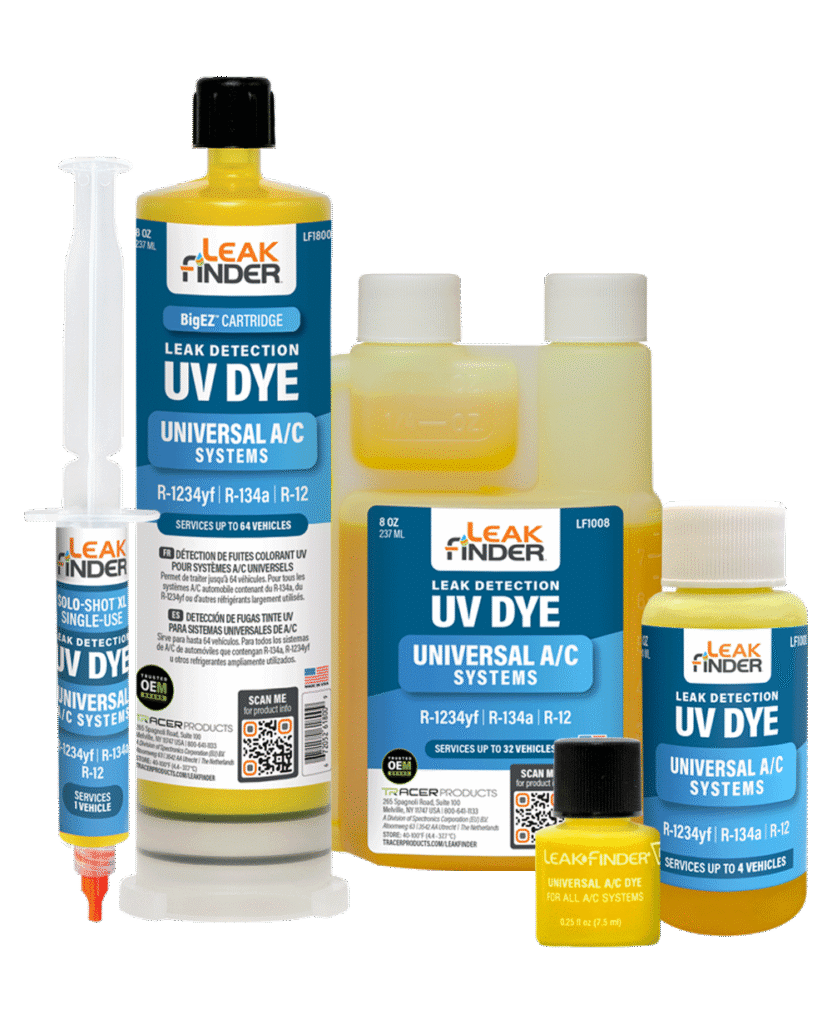
LeakFinder® LF1001 ultraviolet fluorescent universal A/C dyes provide the most precise leak detection for all automotive air conditioning systems containing R-134a, R-1234yf, or other widely used refrigerants and safe for EV/Hybrid systems. These specialty dyes can be safely added to the system. They won’t affect your system’s lubricant properties or change how the equipment works. LeakFinder dyes find the smallest and most problematic leaks that would otherwise be impossible to detect.
Coolant Leaks: Preventing Overheating and Engine Damage
Engine coolant (also known as antifreeze) circulates through the engine and radiator to keep temperatures under control. A coolant leak can quickly lead to overheating, warped heads, and costly repairs if left unchecked.
Here are the most common coolant leak locations in a vehicle:
| Coolant Components that can leak | Location and why the part can leak | Recommendation for the leak site |
|---|---|---|
| Radiator | Location: At the front of the engine bay. Why it leaks: – Corrosion in the core – Cracked plastic end tanks – Impact damage from debris | Look for dripping at the corner, seams, or lower tank, as well as dried coolant residue. |
| Hoses and Hose Connections | Location: Radiator hoses, heater hoses, and smaller bypass lines throughout the engine bay. Why they leak: – Rubber aging, cracking, or becoming soft and swollen – Loose or rusted hose clamps – Porous or “sweating” hoses on older vehicles | Signs include wet hose connections, dried coolant crust, or visible spray patterns. |
| Water Pump | Location: Usually mounted at the front of the engine, driven by a belt or timing system. Why it leaks: – Internal seal failure leading to dripping from the pump’s weep hole – Gasket failure where the pump meets the engine | Watch for coolant dripping from the pump area and coolant stains around the housing. |
| Head Gasket | Location: Between the cyclinder head and engine block. Why it leaks: – Overheating, warping, or age-related failure – Poor sealing between coolant passages and combustion chambers | – Thick white exhaust smoke (coolant burning in the combustion chamber) – Bubbling in the coolant reservoir – Coolant loss with no obvious external leak – Milky oil if coolant and oil mix |
| Coolant Reservoir (Overflow Tank) | Location: Plastic tank connected to the radiator by a small hose. Why it leaks: – Cracks in the plastic tank – Damaged or weak reservoir cap – Failing seals at hose or sensor fittings | Look for coolant around the seams, base, or cap area. |
| Heater Core | Location: Inside the dashboard, supplying warm air to the cabin. Why it leaks: – Corrosion of the small internal tubes – Age and contamination | – Sweet, “maple syrup” smell inside the cabin – Foggy windows with a film on the glass – Damp or wet carpet in the front footwells. |
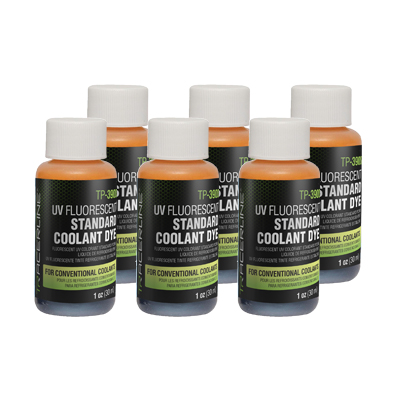
Tracerline: Standard Universal Coolant Dye and our Rite-Blend™ provide the comfort of finding car engine coolant leaks. Our Rite-blend (TP-3940-0601) is for both conventional & extended-life coolants, while our Standard Coolant Dye (TP-3900-0601) is compatible with conventional coolants. Both products are DEX-COOL® Compatible.
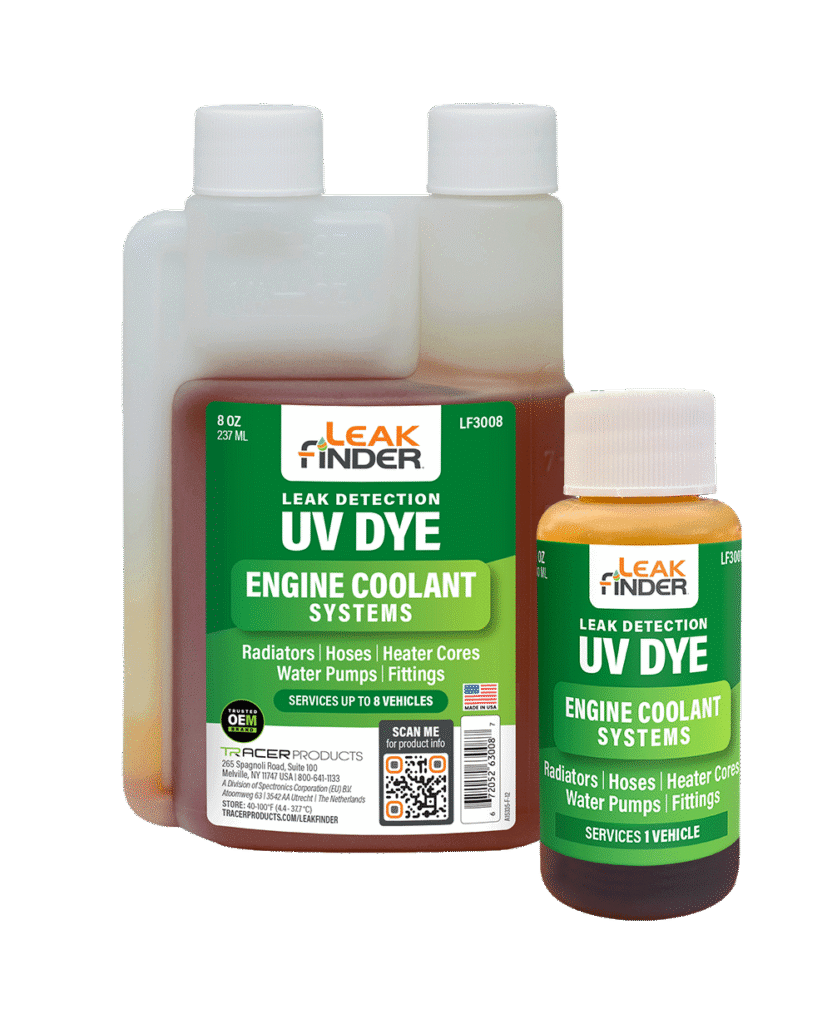
LeakFinder® Engine Coolant UV dye offers fluorescent dye for all conventional coolants (LF3001/LF3008). These dyes help locate leaks in radiators, hoses, heater cores, water pumps, and fittings.
The LeakFinder coolant dye fluoresces green and is compatible with all leak detection flashlights.
How to Tell Which Fluid Is Leaking Under Your Car
If you see a puddle under your vehicle, a few quick checks can help narrow down the type of leak:
- Color
- Engine oil: Brown to black, slick.
- Coolant: Often green, orange, pink, or yellow with a sweet smell.
- A/C refrigerant: Usually invisible, but may leave a light oily residue, especially near fittings or components.
- Location
- Front/middle under the engine: Often engine oil or coolant.
- Under the firewall or passenger area: Could be coolant from the heater core.
- Near the front of the vehicle with no visible coolant color: Possibly A/C condenser or refrigerant-oil residue.
- Smell
- Oil: Oily, sometimes burnt.
- Coolant: Sweet, sugary odor.
These basic observations are helpful, but they don’t replace a proper inspection.
How Tracer tools fit the vehicle workflow to find the Exact Leak Source
Because many systems run through tight spaces and behind covers, visual inspection alone isn’t always enough. For accurate diagnosis, professional technicians commonly use:
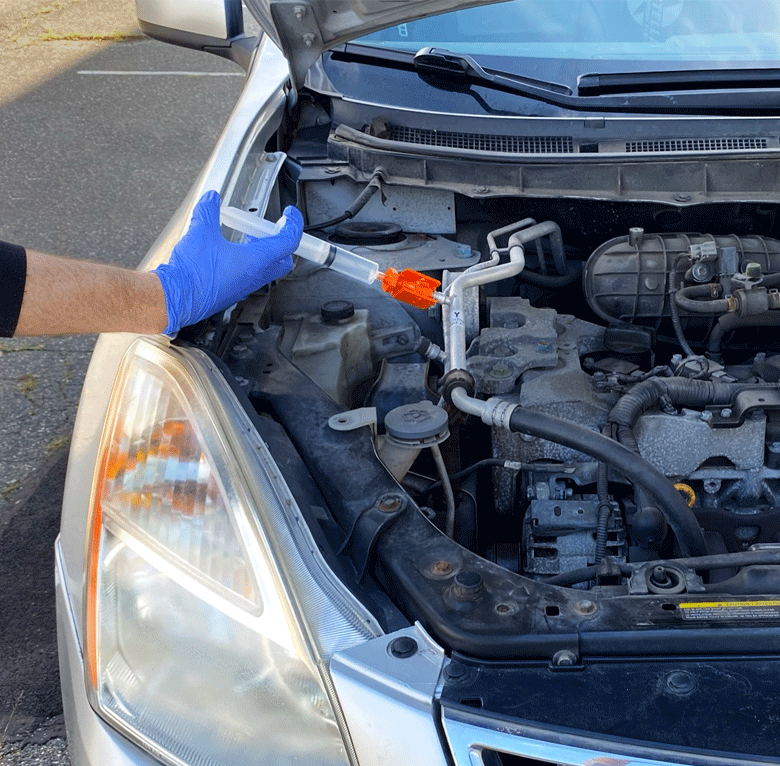
- UV fluorescent leak detection dyes added to oil, coolant, or A/C systems
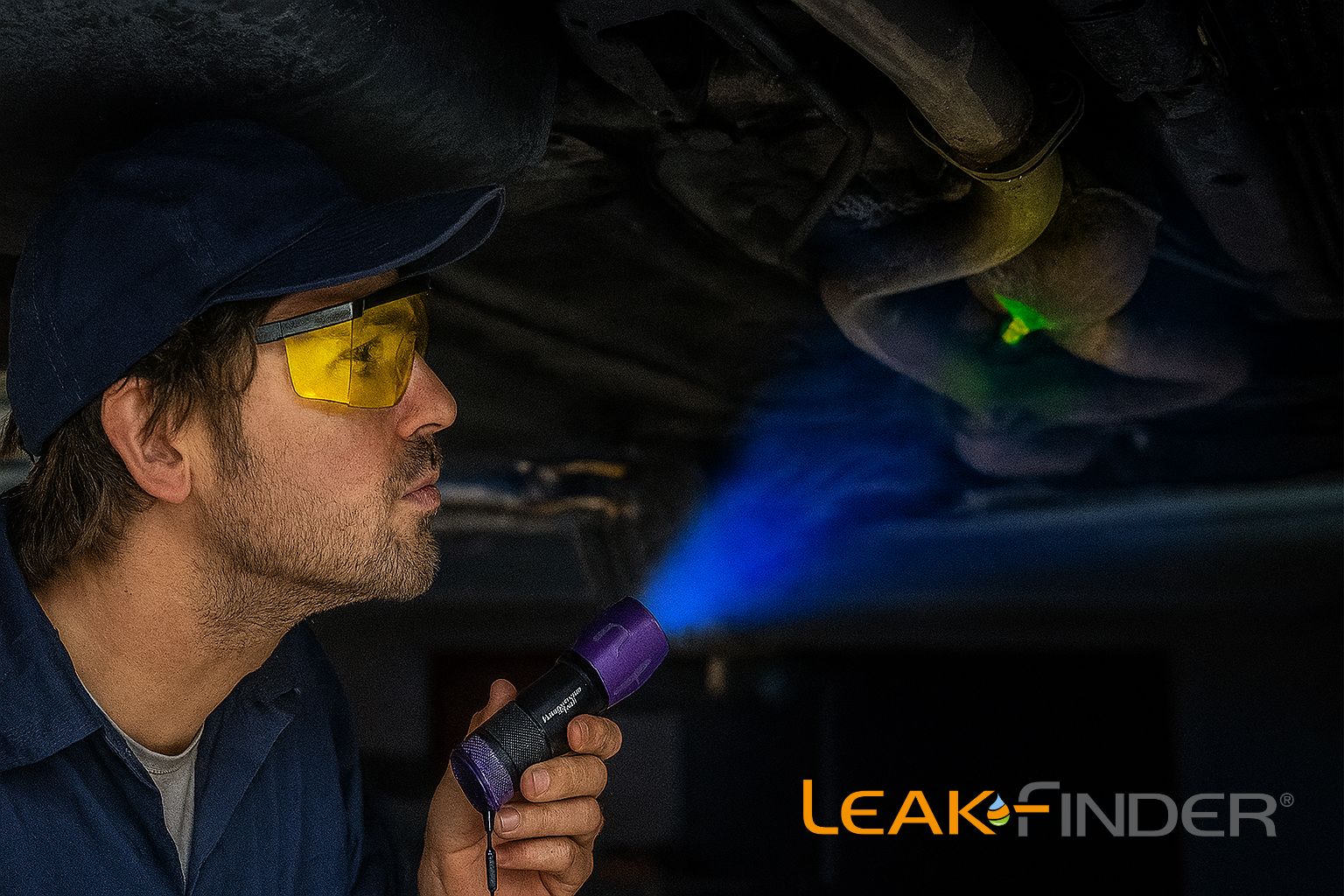
- UV LED, violet or blue lamps to make even tiny leaks glow brightly
- Pressure or vacuum tests for cooling and A/C systems
- Diagnostic or Electronic leak detectors for refrigerant
By combining these methods, a shop can quickly pinpoint the exact source of a fluid leak, rather than just guessing based on the location of a puddle.
Fixing the right component the first time saves time, reduces comebacks, and protects critical parts like the engine, compressor, and cooling system from long-term damage.
FAQs: Vehicle Leaks and Using Tracer® UV Dye Safely
The most common leaks technicians see are engine oil leaks (valve covers, oil pans, main seals), coolant leaks (hoses, radiators, water pumps), and A/C refrigerant leaks (Schrader valves, O-rings, condensers). Each system has predictable weak points, which makes diagnosis faster when confirmed with UV dye.
Not when you use the right dye. Tracer® UV dyes are OEM-grade and formulated to be fully system-compatible, meaning they won’t compromise oil viscosity, refrigerant performance, or coolant protection. They circulate safely with the fluid and only fluoresce at the leak point—so you find the source without risking the system.
Yes. Tracer® dyes are engineered for modern vehicle requirements, including hybrid/EV-safe applications and compatibility with today’s A/C refrigerants and lubricants. They’re designed to meet the performance expectations of professional automotive service.
Tracer® UV dye remains stable in the system for continued diagnostics. That means if a leak worsens later, the dye is already in place to help verify the source quickly—no re-guessing and no repeat trial-and-error repairs.
Talk to Tracer
Want a vehicle‑specific kit list (R‑1234yf adapters, EV‑safe procedures, and technician forms)? We’ll tailor a compliant, audit‑ready leak‑detection toolkit for your service bays and fleets.